PS PeptideSuppliers.org Finding the right peptide supplier for you
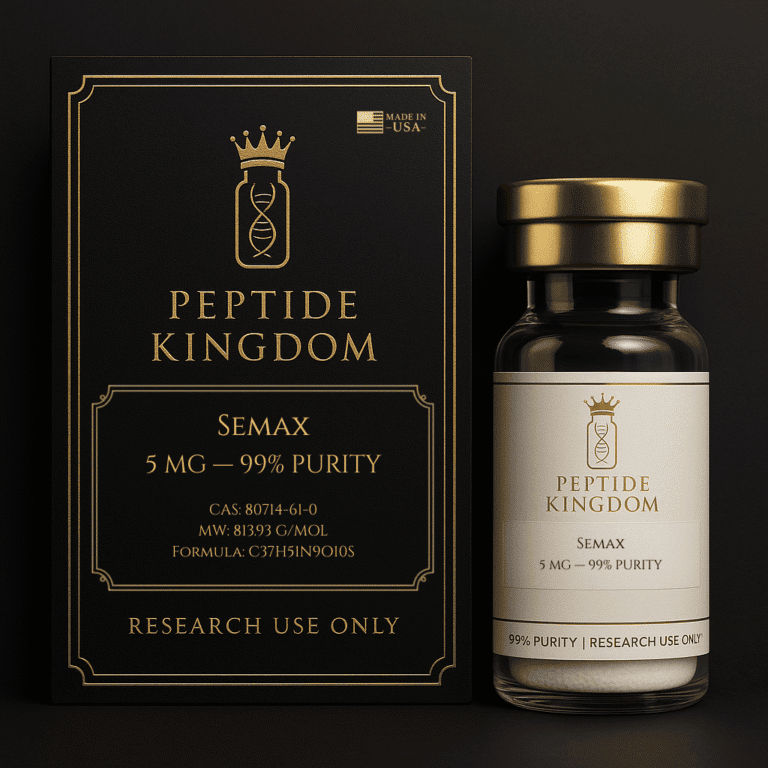
Semax reference image
Peptide guide

Semax Peptide Guide & Supplier Listing Notes

ACTH(4-10) analog neuropeptide

Nootropic/neuropeptide research

Cognitive and neuropeptide research compounds Educational guide Supplier transparency

Research Areas

The main research domains where this compound appears most often.

Semax is most strongly associated with neuroprotection research. Studies have examined its effects in models of cerebral ischemia and neurological stress.

A second area is neurotrophic signaling. The compound is often discussed in relation to BDNF and other pathways involved in neuronal plasticity.

Cognition and attention are also common topics. Semax has been discussed in relation to nootropic effects and attention-related conditions, but this area requires careful presentation because public claims often exceed the evidence.

Semax is also relevant to transcriptomic research because some studies examine changes in gene expression following administration.

Animal studies

What preclinical work has emphasized

Animal research is central to the Semax literature. Rodent models have investigated BDNF changes, neurotransmitter effects, ischemic stroke models, and transcriptomic responses.

These studies support Semax's identity as a neuroprotection and neurotrophic research compound. The limitation is translation. Animal models of brain injury or cognition do not automatically predict human outcomes, and many findings require independent replication.

Human studies

How much human evidence exists

Human research on Semax is more limited and regionally concentrated compared with its popularity online. Some clinical and regional literature discusses neurological and cognitive contexts, but large international randomized trials are limited.

Semax as a compound with interesting human-adjacent and regional research, while emphasizing that much of the strongest mechanistic work comes from preclinical studies.

Current research status

Where the research stands now

Semax remains an active topic in neuropeptide and nootropic research discussions. Current interest centers on BDNF, neuroprotection, ischemia models, neurotransmitter systems, and gene expression.

The main unanswered questions are evidence quality, replication, dosing models, and translation into broader human populations.

Related Compounds

Closely related compounds frequently discussed within the same research category.

Selank is the most common comparison because both are synthetic neuropeptides. Cerebrolysin is related through neurotrophic and neuroprotection research. Dihexa and noopept are often discussed nearby in cognitive research categories, although their structures and mechanisms differ.

Supplier considerations

How to read supplier pages more carefully

Semax listings should clearly identify the peptide sequence and avoid vague nootropic claims. Researchers should look for COAs, batch-specific purity data, storage guidance, and research-use labeling. Because Semax is often sold in different formats, identity and documentation matter.

  • Look for batch-specific COAs instead of generic laboratory files reused across many listings.
  • Check whether the product name, concentration language, and batch references stay consistent from page to page.
  • Read storage and handling notes alongside the document links rather than treating the headline purity claim as enough.
  • Prefer supplier pages that keep research-use labeling, contact details, and policy pages easy to verify.

Linked supplier pages

Supplier pages that help compare naming, documentation access, batch references, and overall page clarity.

Supplier listing

Peptides Kingdom

This listing helps with checking naming, documentation access, storage language, and overall page clarity.

15% off with code KING15

Frequently Asked Questions

Common questions drawn from the published literature and documentation context.

What is Semax?

Semax is a synthetic ACTH-derived peptide studied in neuropeptide and neuroprotection research.

Is Semax the same as Selank?

No. Both are synthetic neuropeptides, but they have different structures and research profiles.

What is Semax studied for?

Semax is studied for neuroprotection, BDNF signaling, gene expression, cognition, attention-related research, and stress response.

Does Semax affect BDNF?

Some studies report changes in BDNF-related markers, especially in preclinical models.

Does Semax have human research?

Human research exists but is more limited and regionally concentrated than public interest suggests.

What compounds are related to Semax?

Selank, cerebrolysin, noopept, and other cognitive research compounds are related.

Is Semax a metabolic peptide?

No. It is primarily a neuropeptide research compound.

What should researchers check when comparing suppliers?

Sequence identity, COAs, batch testing, purity data, and storage guidance.

References

Primary sources and clinical references cited in this overview.