PS PeptideSuppliers.org Finding the right peptide supplier for you
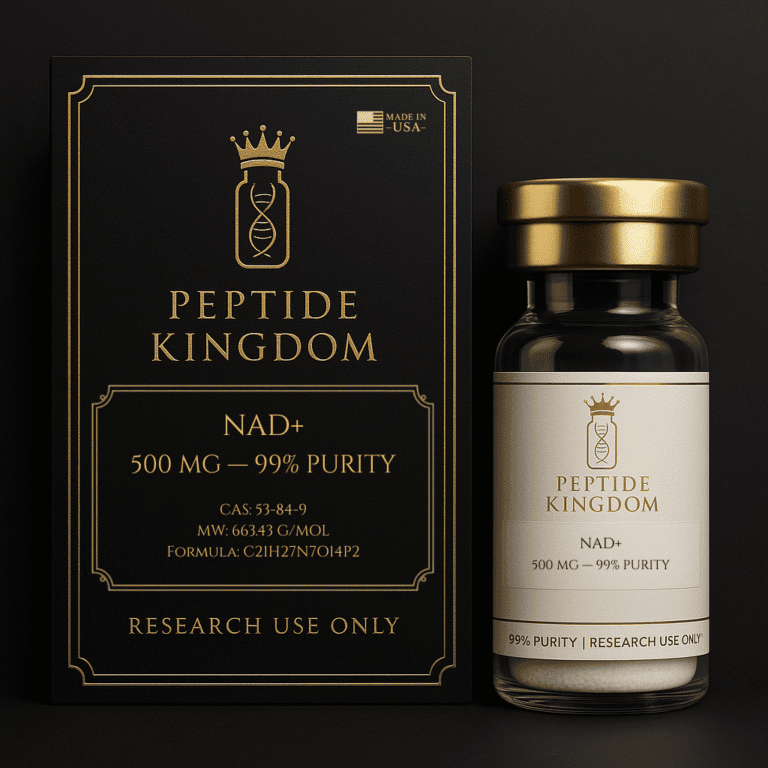
NAD+ reference image
Peptide guide

NAD+ Peptide Guide & Supplier Listing Notes

Endogenous nicotinamide adenine dinucleotide; not a peptide

Metabolic cofactor / cellular-energy research

Longevity and cellular research compounds Educational guide Supplier transparency
Educational disclaimer

Informational reference only

This page is for educational and informational purposes only. PeptideSuppliers.org does not sell peptides, provide medical advice, or recommend human use.

Overview

NAD+ overview

NAD+ is an endogenous nicotinamide adenine dinucleotide molecule; it is not technically a peptide, but it is often compared alongside longevity and mitochondrial research peptides. Published research most often places it within cellular redox biology, aging, metabolism, and mitochondrial function.

The literature around NAD+ is usually interpreted through mechanism, study design, and compound identity. Closely related analogs, shorthand labels, and supplier naming conventions can make those distinctions especially important when comparing papers, trial records, and catalog listings.

Widely researched biochemical pathway; consumer claims often exceed evidence. This broader context helps separate established findings from early-stage signals and keeps the compound anchored to the evidence base rather than to marketing language.

Research snapshot

Quick research reference

Research Category: Cellular Longevity Research

Research Status: Widely researched biochemical pathway; consumer claims often exceed evidence.

Common Areas Studied:

  • Cellular redox biology, aging, metabolism, mitochondrial function

Related Compounds:

History

Where the compound came from and why researchers keep returning to it.

The history of NAD+ is easiest to understand as part of a broader research line rather than as a single isolated listing. History from basic biochemistry to modern interest in NAD+ metabolism, precursors, and age-related decline hypotheses.

That history is important because it shows what problem researchers were trying to solve, what earlier compounds shaped the field before NAD+ gained attention, and why the compound continues to be discussed in relation to later studies or newer analogs.

NAD+'s research history spans over a century, since the molecule was first characterized as a coenzyme in cellular respiration long before its more recent framing as a longevity-research target; that older biochemistry literature is far more established than the newer supplement and injectable-research market built around it.

Mechanism of Action

Receptors, pathways, and the biological logic that shapes the research conversation.

NAD+ is central to NAD+/NADH redox cycling and is studied in relation to sirtuins, PARPs, mitochondrial function, DNA repair, and cellular stress response. This is the core biological reason NAD+ is discussed alongside compounds such as MOTS-c, humanin, NMN, NR, CoQ10, and other mitochondrial research compounds.

For NAD+, that means tracking its role as a coenzyme in redox reactions and as a substrate for sirtuins and PARP enzymes separately from marketing claims about 'boosting NAD+ levels,' since those are two different research questions with different levels of supporting evidence.

Unlike the peptides elsewhere in this directory, NAD+ is a dinucleotide, not a peptide, and its research literature includes NAD+ precursors like NMN and NR that work through different absorption and metabolic pathways than direct NAD+ administration. Conflating the precursor and direct-administration literature is a common error in supplier marketing.

Foundational NAD+ biochemistry was established decades ago; the newer research direction, focused on age-related NAD+ decline and precursor supplementation, is a much more recent and less settled area of the literature, which is where most current supplier-market interest sits.

Research Areas

The main research domains where this compound appears most often.

Research area

Aging biology

These studies usually examine cellular stress, senescence pathways, telomere-related biology, mitochondrial function, or other markers used in aging research.

Research area

Mitochondrial metabolism

Published work in this area varies by model, endpoint, and stage of development, so the most useful reading approach is to focus on the specific outcomes each study actually measures.

Research area

Neurobiology

Neurobiology papers in this area often focus on signaling pathways, behavioral models, neuroprotection hypotheses, or stress-response markers tied to the compound.

Research area

Metabolic disease

Metabolic studies often look at lipids, insulin sensitivity, liver markers, inflammatory signals, or composite risk patterns that sit outside a single disease label.

Research area

NAD+ precursors like NMN/NR

Published work in this area varies by model, endpoint, and stage of development, so the most useful reading approach is to focus on the specific outcomes each study actually measures.

Animal studies

What preclinical work has emphasized

Animal studies have examined aging and metabolism, mitochondrial function, and disease-model endpoints. This part of the literature often sets the first expectations around mechanism, tissue effects, or metabolic signaling, but those early signals need to be read with the normal limits of preclinical work in mind.

Preclinical NAD+ and NAD+-precursor research spans rodent aging models and cell-culture redox studies, with intravenous, oral, and precursor-based administration routes tested separately; findings from one route don't necessarily apply to another.

The clearest NAD+ summaries specify whether a study measured direct NAD+ administration, a precursor compound like NMN or NR, or downstream sirtuin activity, since these are frequently conflated in consumer-facing NAD+ marketing despite representing different research questions.

Human studies

How much human evidence exists

Human research includes early studies on NAD+ precursors such as NMN and NR. When human data do exist, the best summaries distinguish the type of study being discussed, the population under investigation, and the limits of what the results can show.

Human NAD+ research includes a growing number of small trials on precursors like NMN and NR, but direct NAD+ infusion research in humans is less extensively documented in peer-reviewed literature than the popularity of NAD+ IV clinics might suggest.

The commercial NAD+ IV-therapy and supplement industry has expanded well ahead of the peer-reviewed human evidence base for direct NAD+ administration specifically, as opposed to the better-documented precursor-supplementation literature.

Current research status

Where the research stands now

Widely researched biochemical pathway; consumer claims often exceed evidence. For NAD+, the current research picture should be read as a snapshot rather than a final verdict, because publication timelines, trial readouts, and category language can shift quickly.

NAD+ is one of the more commercially visible compounds on this site, spanning wellness clinics, supplements, and research-use suppliers, which makes it easy to lose track of how much of that visibility is supported by direct-administration human trials versus precursor studies or older basic-science work.

PubMed searches for NAD+ precursors like NMN or NR often surface more recent clinical-trial activity than searches for direct NAD+ administration, which is a useful distinction when trying to gauge how developed the current human evidence base actually is.

Related Compounds

Closely related compounds frequently discussed within the same research category.

Supplier considerations

How to read supplier pages more carefully

Clarify identity/form, purity, storage, testing, and no anti-aging therapy claims. In this context, the main issue is documentation quality rather than promotional language.

For NAD+, documentation quality starts with naming discipline. If a listing uses shorthand, category labels, or adjacent compound references, the exact compound identity should still be easy to follow. COAs, third-party testing notes, and batch references should reinforce that naming rather than complicate it.

NAD+ research-use products are typically supplied as lyophilized powder or solution requiring refrigerated or frozen storage depending on formulation, and because the molecule is unstable in solution over time, storage and handling documentation matters more here than for many other compounds on this site.

  • Look for batch-specific COAs instead of generic laboratory files reused across many listings.
  • Check whether the product name, concentration language, and batch references stay consistent from page to page.
  • Read storage and handling notes alongside the document links rather than treating the headline purity claim as enough.
  • Prefer supplier pages that keep research-use labeling, contact details, and policy pages easy to verify.

Linked supplier pages

Supplier pages that help compare naming, documentation access, batch references, and overall page clarity.

Supplier listing

Peptides Kingdom

This listing helps with checking naming, documentation access, storage language, and overall page clarity.

15% off with code KING15

Frequently Asked Questions

Common research questions about the compound, evidence base, and supplier documentation.

Is NAD+ a peptide?

NAD+ is included because it is often compared with mitochondrial and longevity-related compounds in the same directory, but it is not technically a peptide.

What does NAD+ do?

NAD+ is central to NAD+/NADH redox cycling and is studied in relation to sirtuins, PARPs, mitochondrial function, DNA repair, and cellular stress response. That pathway-level description captures the main biological rationale being studied.

Difference from NMN/NR?

Widely researched biochemical pathway; consumer claims often exceed evidence. The clearest interpretation comes from reading mechanism, evidence level, and supplier documentation together rather than relying on one isolated claim.

How is NAD+ usually compared with related compounds?

NAD+ is most usefully compared through mechanism and category fit. Nearby entries such as MOTS-c help show how receptor logic, research emphasis, and documentation patterns differ without treating all of them as interchangeable.

Is NAD+ same as NMN?

Usually not. NAD+ is treated here as a specific entry, separate from nearby labels that may overlap in marketing shorthand but differ in identity, mechanism, or documentation.

What is NAD+?

NAD+ is an endogenous nicotinamide adenine dinucleotide molecule, not technically a peptide. Research literature on this compound is usually interpreted through mechanism, evidence level, and documentation quality.

What research areas is NAD+ usually linked to?

The main areas linked to NAD+ in this literature are aging biology, mitochondrial metabolism, neurobiology, metabolic disease, and NAD+ precursors such as NMN and NR. Those categories reflect the published research record around the compound.

What should be verified on a NAD+ supplier page?

Clarify identity/form, purity, storage, testing, and no anti-aging therapy claims. In practice, that means checking batch-specific COAs, identity/purity language, research-use labeling, and overall page consistency.

How developed is the current NAD+ research literature?

Widely researched biochemical pathway; consumer claims often exceed evidence. Trial records and literature searches are still the best way to verify where the field stands at any given point.

What makes NAD+ different from related compounds?

NAD+ is most usefully compared through mechanism and category fit. Nearby entries such as MOTS-c help show how receptor logic, research emphasis, and documentation patterns differ without treating all of them as interchangeable.

References

Research entry points and source pages for verifying the broader literature.