PS PeptideSuppliers.org Finding the right peptide supplier for you
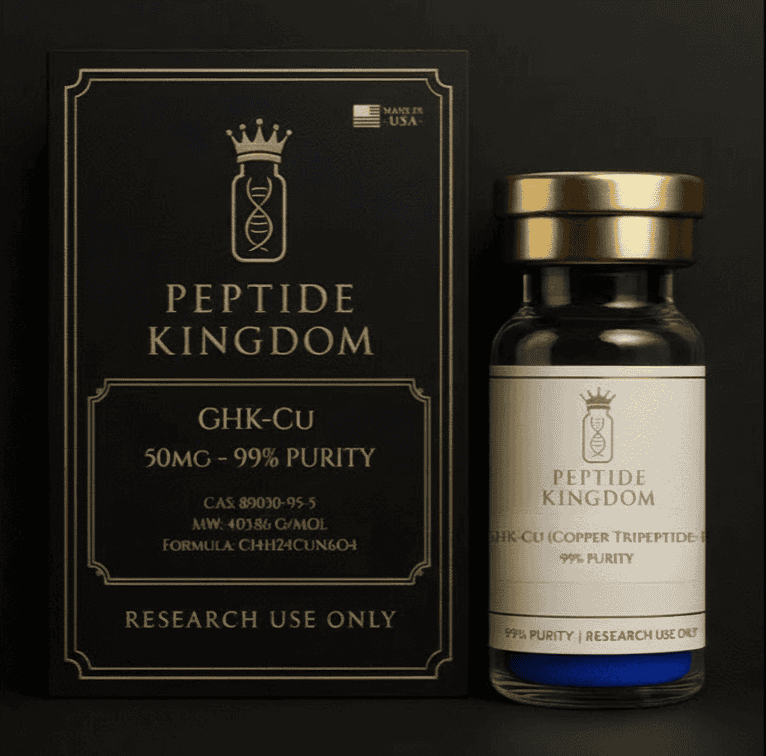
GHK-Cu reference image
Peptide guide

GHK-Cu Peptide Guide & Supplier Listing Notes

Copper-binding tripeptide

Copper peptide research

Cosmetic and pigmentation research compounds Educational guide Supplier transparency
Educational disclaimer

Informational reference only

This page is for educational and informational purposes only. PeptideSuppliers.org does not sell peptides, provide medical advice, or recommend human use.

Overview

GHK-Cu overview

GHK-Cu is Copper-binding tripeptide. Published research most often places it within skin repair, extracellular matrix, wound healing, hair/skin aging research.

The literature around GHK-Cu is usually interpreted through mechanism, study design, and compound identity. Closely related analogs, shorthand labels, and supplier naming conventions can make those distinctions especially important when comparing papers, trial records, and catalog listings.

Widely studied but overmarketed; keep evidence-graded. This broader context helps separate established findings from early-stage signals and keeps the compound anchored to the evidence base rather than to marketing language.

Research snapshot

Quick research reference

Research Category: Appearance and Matrix Research

Research Status: Widely studied but overmarketed; keep evidence-graded.

Common Areas Studied:

  • Skin repair, extracellular matrix, wound healing, hair/skin aging research

Related Compounds:

History

Where the compound came from and why researchers keep returning to it.

The history of GHK-Cu is easiest to understand as part of a broader research line rather than as a single isolated listing. Discovered in human plasma; historical interest in copper peptide biology.

That history is important because it shows what problem researchers were trying to solve, what earlier compounds shaped the field before GHK-Cu gained attention, and why the compound continues to be discussed in relation to later studies or newer analogs.

Historical context also helps separate mature clinical development from early-stage interest. Some compounds now have decades of published background, while others are still discussed mainly through preclinical or investigational framing. Keeping that timeline visible makes it easier to place newer claims against the longer record of the field.

Mechanism of Action

Receptors, pathways, and the biological logic that shapes the research conversation.

Copper-binding peptide involved in collagen, extracellular matrix, wound repair, antioxidant/inflammatory pathways, and tissue remodeling models. This is the core biological reason GHK-Cu is discussed alongside compounds such as bpc-157; kpv; tb-500; copper peptides; collagen-related peptides..

At the receptor and signaling level, the key issue is how the compound engages its target and how that engagement is translated into measurable effects in metabolism, endocrine signaling, tissue repair, neurobiology, or another research domain. The clearest summaries connect receptor activity to the biological system under study without overstating how settled the downstream interpretation is.

Mechanistic clarity is also what separates a specific compound from a broad family label. Some entries in this directory refer to single receptor agonists, some to multi-pathway analogs, some to fragments, and some to closely related variants whose naming can become confusing in catalog copy. The mechanism section keeps those differences visible.

As the literature develops, mechanistic questions often become more detailed. Early work may focus on receptor engagement or proof of concept, while later studies move toward comparative efficacy, tissue-specific effects, signaling bias, or safety-related tradeoffs. That progression is part of what makes mechanism central to understanding the broader research record.

Research Areas

The main research domains where this compound appears most often.

Research area

Skin biology

Work in this area often focuses on extracellular matrix activity, collagen turnover, dermal remodeling, follicle biology, or related tissue-quality markers.

Research area

wound healing

This part of the literature usually follows tissue repair endpoints such as structural healing, inflammatory response, angiogenesis, or recovery-related signaling in model systems.

Research area

collagen/ECM

Work in this area often focuses on extracellular matrix activity, collagen turnover, dermal remodeling, follicle biology, or related tissue-quality markers.

Research area

hair/follicle biology

Work in this area often focuses on extracellular matrix activity, collagen turnover, dermal remodeling, follicle biology, or related tissue-quality markers.

Research area

cosmetic/dermatology research

Published work in this area varies by model, endpoint, and stage of development, so the most useful reading approach is to focus on the specific outcomes each study actually measures.

Animal studies

What preclinical work has emphasized

Animal and cell studies include wound-healing and tissue-remodeling endpoints. This part of the literature often sets the first expectations around mechanism, tissue effects, or metabolic signaling, but those early signals need to be read with the normal limits of preclinical work in mind.

Species differences, model selection, dosing frameworks, and lab-specific protocols can all shape the final result. That is why preclinical work is valuable as a map of what researchers are testing, not as a guarantee that the same signal will hold up in human study programs.

The clearest summaries explain what model was studied, what kind of endpoint was examined, and why preclinical findings should not be carried too far beyond the scope of the paper.

Human studies

How much human evidence exists

Some human/cosmetic topical literature exists; separate cosmetic context from RUO context. When human data do exist, the best summaries distinguish the type of study being discussed, the population under investigation, and the limits of what the results can show.

That matters because trial design determines how much weight a finding can carry. Early proof-of-concept work, open-label experience, large randomized trials, and post-approval follow-up answer different questions and should not be collapsed into one generic claim about effectiveness.

Human-study context is also an important reality check. The presence of human data does not make a research listing equivalent to a prescription product, and it should not blur the line between clinical evidence and a research-use catalog page.

Current research status

Where the research stands now

Widely studied but overmarketed; keep evidence-graded. For GHK-Cu, the current research picture should be read as a snapshot rather than a final verdict, because publication timelines, trial readouts, and category language can shift quickly.

This is also the place to separate investigational momentum from commercial noise. Some compounds have large and mature bodies of evidence, others sit in the middle of active development, and some remain mostly preclinical despite broad online visibility. A useful summary should make that distinction explicit.

The linked literature and trial databases remain the clearest way to check whether the field is moving through early exploration, active clinical development, or longer-term comparative follow-up.

Related Compounds

Closely related compounds frequently discussed within the same research category.

Supplier considerations

How to read supplier pages more carefully

Check copper complex identity, purity, COA, light/storage sensitivity, formulation clarity. In this context, the main issue is documentation quality rather than promotional language.

For GHK-Cu, documentation quality starts with naming discipline. If a listing uses shorthand, category labels, or adjacent compound references, the exact compound identity should still be easy to follow. COAs, third-party testing notes, and batch references should reinforce that naming rather than complicate it.

Storage considerations belong here as well. Pages that discuss laboratory documentation but say little about labeling, packaging, or handling leave an important part of the record incomplete. Strong supplier pages connect document access, basic handling language, and research-use framing in one coherent place.

  • Look for batch-specific COAs instead of generic laboratory files reused across many listings.
  • Check whether the product name, concentration language, and batch references stay consistent from page to page.
  • Read storage and handling notes alongside the document links rather than treating the headline purity claim as enough.
  • Prefer supplier pages that keep research-use labeling, contact details, and policy pages easy to verify.

Linked supplier pages

Supplier pages that help compare naming, documentation access, batch references, and overall page clarity.

Supplier listing

Peptides Kingdom

This listing helps with checking naming, documentation access, storage language, and overall page clarity.

15% off with code KING15
Supplier listing

Amino Club

This listing helps with checking naming, documentation access, storage language, and overall page clarity.

20% off with code AMINOSAVE

Frequently Asked Questions

Common research questions about the compound, evidence base, and supplier documentation.

What is GHK-Cu?

GHK-Cu is Copper-binding tripeptide. Research literature on this compound is usually interpreted through mechanism, evidence level, and documentation quality.

Why copper?

Widely studied but overmarketed; keep evidence-graded. The clearest interpretation comes from reading mechanism, evidence level, and supplier documentation together rather than relying on one isolated claim.

What is it studied for?

GHK-Cu is Copper-binding tripeptide. Research literature on this compound is usually interpreted through mechanism, evidence level, and documentation quality.

Cosmetic or research?

Widely studied but overmarketed; keep evidence-graded. The clearest interpretation comes from reading mechanism, evidence level, and supplier documentation together rather than relying on one isolated claim.

What does GHK-Cu stand for?

Copper-binding peptide involved in collagen, extracellular matrix, wound repair, antioxidant/inflammatory pathways, and tissue remodeling models That pathway-level description captures the main biological rationale being studied.

What should testing documents show?

Verification starts with consistency: naming, batch references, storage language, and linked laboratory files should all line up. That is usually more informative than a polished headline or a generic category badge.

What research areas is GHK-Cu usually linked to?

The main areas linked to GHK-Cu in this literature are Skin biology; wound healing; collagen/ECM; hair/follicle biology; cosmetic/dermatology research. Those categories reflect the published research record around the compound.

What should be verified on a GHK-Cu supplier page?

Check copper complex identity, purity, COA, light/storage sensitivity, formulation clarity. In practice, that means checking batch-specific COAs, identity/purity language, research-use labeling, and overall page consistency.

How developed is the current GHK-Cu research literature?

Widely studied but overmarketed; keep evidence-graded. Trial records and literature searches are still the best way to verify where the field stands at any given point.

What makes GHK-Cu different from related compounds?

GHK-Cu is most usefully compared through mechanism and category fit. Nearby entries such as BPC-157, KPV, TB-500 / Thymosin Beta-4 help show how receptor logic, research emphasis, and documentation patterns differ without treating all of them as interchangeable.

References

Research entry points and source pages for verifying the broader literature.